Wednesday, September 11, 2013

Top Ten Tuesday: Desperately Necessary Film Adaptations...Only one day late this week!

In which Sam rants about existing adaptations, raves about some of her favorite novels, and tries to convince Hollywood that the time is now for that Harriet Tubman biopic already.
As always, this feature courtesy of The Broke and The Bookish!
Seriously, I have been trying to convince people for years. Why isn’t there an amazing, visceral, Oscar-winning Harriet Tubman biopic? Her story is incredible. To be fair to Hollywood, they are bringing Twelve Years a Slave to theaters this fall. Still, Harriet’s heroism cries out for recognition!

Harriet Tubman. A boss.
In honor of Harriet, let’s look at ten other candidates due for recognition in Tinseltown. (This task is notably more difficult than I thought it would be due to the number of upcoming YA novel adaptations in film - Divergent! Ender's Game! Gah! Still, that’s something to be excited about as a YA blogger!)

10.  Anita Diamant, The Red Tent


Lush, rich, graphic retelling of a famous Biblical story – this time, from a woman’s perspective. It’s such an intimate immersion into the life of a woman in early human history. I would love to see it translated to screen!

9. Meg Cabot, Size 12 Is Not Fat, Size 14 Is Not Fat Either, Big Boned
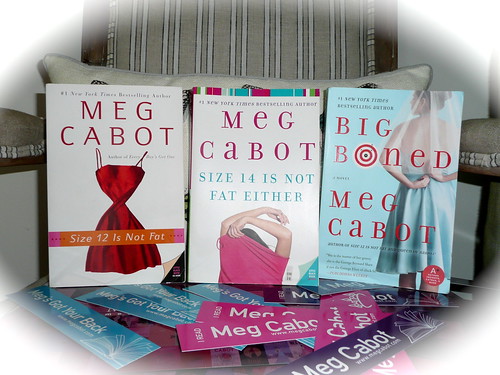
All three novels. Plus...Meg Cabot swag?
Let me be clear: this is another wacky Meg Cabot heroine who is clearly blessed and refuses to see it. That being said, this is the perfect concept for a television series: former pop star turned assistant dorm director deals with murder mysteries at her building. C’mon, the pilot is writing itself! I see this adaptation as an investment vehicle.

8. Sophie Kinsella, The Undomestic Goddess


Primarily for the greenhouse scene (just read it) and fingers crossed for my favorite British star Idris Elba cast as the male lead!

Full disclosure: I would recommend Idris Elba as every male lead.
7. Carolyn Keene, Nancy Drew Mystery Stories

Look at that smart lime green sheath dress!
Such an underrated female heroine. She deserves a proper film, not a strange tween twist that treated her as kitsch! (Okay…she may be a bit kitschy at this point.) Bring on the sensible twinsets and clever quips!

6. Rick Riordan, The Kane Chronicles
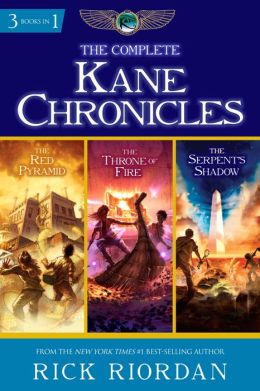
Some of my favorite YA covers, too!
The Percy Jackson films are beyond salvageable in my mind at this point, but Riordan’s clever and thoughtful take on Egyptian mythology I’m willing to cross my fingers for, and hope for a better silver screen adaptation.
In the interim, check out the graphic novel!
5. Gary Paulsen, Hatchet

The original cover, which I always thought placed the hatchet in a rather odd place...
I see it as a film with stunning cinematography of the Canadian wilderness in summertime, lots of silence, startling visuals – a sort of Life of Pi for the survivalist crowd.

The whole movie...just THIS.
4. Scott O'Dell, Island of the Blue Dolphins
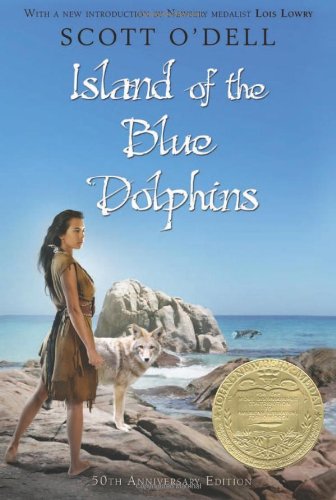
I want an island with my canine friend!
Similar to Hatchet, it’s easy to picture this island in my mind’s eye – the hut she builds, the fence, her dogs – it’s a quiet film, but it’s a place you want to see and visit. I think a movie is the perfect device to transport people to her world.

3. Rae Carson, Girl of Fire and Thorns, Crown of Embers, and The Bitter Kingdom

Image credit to Carina Olsen! Thanks for the collage :)
Can’t stop, won’t stop raving about this trilogy. Still working my way through Bitter Kingdom – that promised review is coming down the pipeline – but such an epic story, with big, powerful landscapes, three-dimensional characters, and a flawed but lovable heroine!

2. Garth Nix, Sabriel, Lirael, and Abhorsen; as well as the short story in Across the Wall compilation

Image courtesy of Airiz at Cinderella in Rubber Shoes!
I could tell you all the reasons that I want this trilogy, and you would, if you have read the novels, inevitably agree with me (world-building! Characterization! Plot! Epic scale!) yet I desperately want to refrain from telling you the real reason this trilogy should make it to screen. And that is: Merch.

Awesome fan-made bell bandolier by Elentari-Liv at DeviantArt!
Yes, basically, I just want my own bell-bandolier.

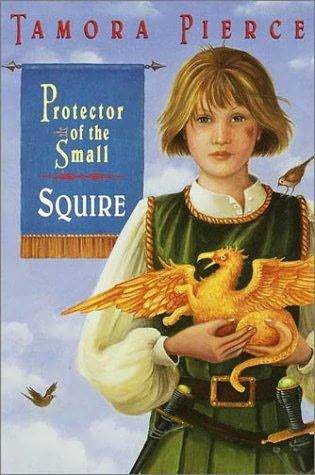
1. Tamora Pierce, Song of the Lioness and Protector of the Small

A Song of the Lioness series cover
One of my favorite covers from the Protector of the Small quartet
You want it. I want it. We all want it. Tamora Pierce hastried to gently break the news that it may never happen. But the dream lives on!


Also, I’m now up to 3 mentions of Protector of the Small. Your move, Meg.


-sam

Review of Legend by Marie Lu

What happens when a video game designer tries her hand at young-adult novels?  Only good things, my friends.

Despite having a  good rating on Goodreads, I hadn’t heard much about Legend.  Legend managed to get lost among so many other books in the dystopian star-crossed-lovers genre, despite being the best of that genre I have read this year.  Legend alternates between the voices of June, a military prodigy from a high ranking family in the Republic (comprised of the western half of the old United States, which split from the Colonies after the flooding of the majority of the eastern seaboard; let this be a lesson to us on environmentalism and the importance of preserving the ice caps!) and Day, the Republic’s most notorious outlaw who is endeavoring to save his younger brother from the disease that plagues the poor (envision Robin Hood).  

The first thing I noticed, and the only less than sparkling thing I will say about this book is that the voices of June and Day sounded the same to me.  The format of the book alternates between Day’s and June’s points of view (also alternative fonts and colors, to help delineate the two voices).  Maybe it’s because they’re both military geniuses and first rate strategists and therefore their thoughts sound very similar?  Regardless, I often found myself hesitating, trying to remember why June knew certain information, only to realize I had transitioned back into Day’s perspective.

The lives of these two brilliant youth cross after June’s brother, and only living relative, is murdered and Day is framed for the crime.  June is put on the case to track down Day and bring him to personal and political justice, but while undercover she discovers a governmental conspiracy that puts her loyalty to question.

Conspiracy Theories 
There were a couple of things that set Legend apart from other books in this very popular genre:
  • The characters are non-white (woo hoo diversity!)
  • June is as skilled, talented, and kick ass (probably more so) than Day, and Day is secure enough to acknowledge and admire it (woo hoo strong female characters and men who are feminists!)
  • I thought I knew what the climactic action was going to be and then Marie Lu covered so much ground, heightened the stakes so much more than I had anticipated (woo hoo fast moving plot that doesn’t neglect character insights and thought process!)
  • Characters have bigger fish to fry than sorting out their love lives.  Not that I’d call this book true to life (it’s dystopian after all) but I like books that recognize characters have more things going on than an all-consuming love for another character. We’ve got families, we’ve got jobs, we’ve got government cover-ups to worry about, you know?

And it doesn’t hurt that I imagine Day looking like this:


-Kate

Saturday, September 7, 2013

Snips & Specs & Stress Relief

In which Sam rants about stress, raves about being inspired by YA fiction heroines, and discovers stress relief in her favorite novels.

As I mentioned last week, I just started back at law school and am already stressed out! This is my third and final year in the program, and yet I am still surprised every semester at how much work there is to do. 

HOW DID THIS HAPPEN AGAIN
But of course, you are not here to read about my busy schedule - you're here to read about books! And today I am happy to indulge, because I believe there is a strong correlation between stress levels and sources of inspiration. Let's put aside for now the incredible people in our own lives who manage their stress effectively, and the amazing people around the world who accomplish so much while facing far more daunting obstacles than papers and final exams. 

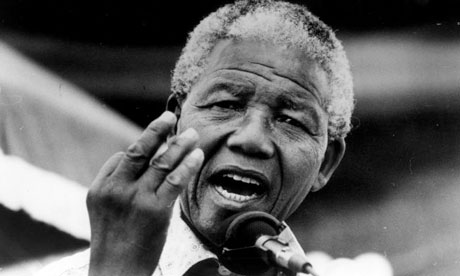
For example - Nelson Mandela spent decades in prison for his activism and was a catalyst for the end of apartheid in South Africa. Incidentally, there is a biopic starring Idris Elba about Mandela's life coming out in October.
They are all sources of inspiration to me, but sometimes I need both escape from the often-harrowing real world, escape and inspiration, and that's where fiction comes in.

I thought of this topic when I just cracked open my new copy of Rae Carson's The Bitter Kingdom (review to follow!) because I find the main character, Elisa, so inspiring. All I can tell you so far is that the novel opens with Elisa once again immediately pushing herself to her physical limits, and I can't wait to read more!


So excited to start reading!
But the number one most inspiring character from YA novels that, when I'm stressed out, I read about is Lady Keladry of Mindelan from Tamora Pierce's Protector of the Small quartet.

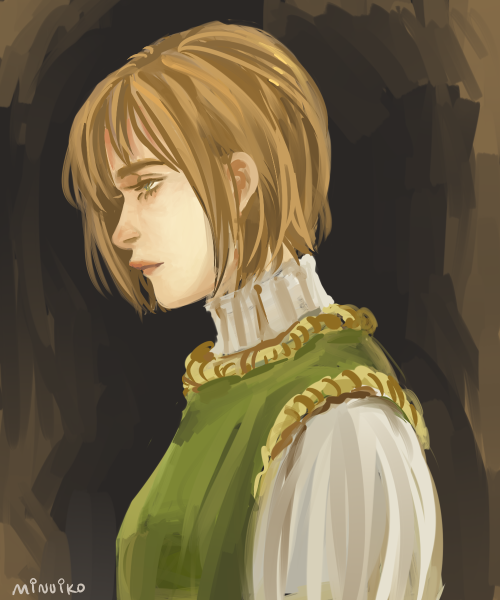
It seems Meg and I are in a competition over who can bring up Kel the most often (Meg: 1, Sam: 2) but there is absolutely a reason. Kel is the classic warrior stoic. Nothing fazes her; nothing shakes her. She keeps her cool in some insane circumstances as the first openly female knight in a century. She is hazed, beaten, mocked, ridiculed, whispered about, tormented, and almost denied her dream, but no matter what - she perseveres.

painting of kel
Amazing fanart of Kel by Minuiko


What heroines or heroes inspire you? Let us know in the comments!

-sam

Wednesday, September 4, 2013

Review of Pegasus by Robin McKinley, Or Why Do I Always Want Talking Animal Best Friends?


Thanks to the recommendations of our own Sam, and our friend Elizabeth at Oboechica Books, this week I read Pegasus by Robin McKinley.


Overview: McKinley has been writing women-centered spectulative fiction since the 70s, but Pegasus is her newest novel, with its sequel due out next year. It focuses on the young Princess Sylviianel, who, according to the tradition of her people, is ceremonially bound to a member of the pegasus royal family on her twelfth birthday. For most human/pegasus pairs, the binding is merely symbolic, as the humans and pegasi must communicate through limited hand signals and the assistance of a human magician called a Speaker. The two species coexist peacefully, but cannot consider themselves friends due to this divide. This has been “the way things are” for a thousand years.

The Good: But Sylvi and her pegasus, Ebon, change everything. At their binding, they discover they can communicate perfectly – without the aid of a magician. Their friendship is definitely the highlight of the novel. Ebon is brash, outspoken, and opinionated, with a great sense of humor. He is a perfect balance to the more reserved, intellectual Sylvi, who as the youngest and smallest member of her family is used to coming last at court. In fact, McKinley is really gifted at characterization, and some of my other favorite characters include Sylvi’s mother, the queen, a warrior who refuses to retire, and the queen’s bound pegasus who communicates even more poorly with humans than most pegasi, yet somehow manages to be very soft and empathetic. I also appreciated the depiction of Sylvi’s relationship with both her parents as loving and grounded, since the trope in YA fiction seems to be to get rid of the parents to give the main character more freedom.

The Not-So-Good: However, I had a big problem with this novel’s pacing – and having read some other reviews, this seems to be a universal problem. The first half of Pegasus read a lot like Tolkien’s The Silmarillion: a kind-of-interesting history lesson that you sit through so you can get to the MORE awesome stories of The Hobbit or The Lord of the Rings. The history of Balsinland, the human kingdom, and Rhiandomeer, the pegasus kingdom, IS important – it’s relevant for us to know that the human/pegasus means of communication has been strained and difficult for a thousand years. But McKinley’s method of delivering this information to the reader is less than graceful and it mostly gets dumped on us in big chunks. The book didn’t feel like it really started until halfway through, when Sylvi, as a sixteenth birthday gift, is granted the chance to visit Rhiandomeer, something no human has ever done.

And speaking of pacing, I had no clue until I finished the book that it was part of a series. I’m not sure how other readers feel, but this was problematic for me, since I was distracted for the last 100 pages or so wondering how the heck McKinley was going to wrap this up. Nowhere on the cover (at least of my edition) did it announce that there would be a sequel, and the fact that it doesn’t yet have a working title (except for Pegasus II) makes me sort of feel that a second book may have been an accident. Like, “whoops, this is getting really long, I better just stop here and pick up again in 2014.” It was jarring for me to find out at the end that a novel that seemed to be a standalone in fact was not, although this may be more of a marketing/advertising flaw than a flaw in McKinley’s writing.

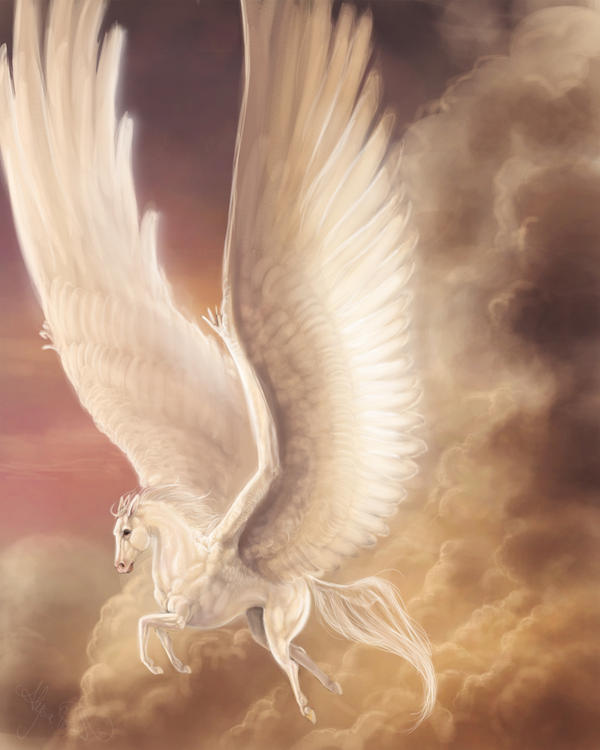
Beautiful fanart by Leashe on deviantART

Takeaway: A highly enjoyable second half of the novel, if you can power through the lengthy first half. Rhiandomeer and pegasus culture is fascinating, subtle, and fully-fleshed out, and Sylvi and Ebon’s friendship will make you wish YOU could have a pegasus best friend. There are some great fantasy elements at play here, including a mysterious and powerful Sword, human magicians with unclear motivations, and, in a foreshadowing of the next book, an invasion of dangerous, supernatural creatures into Balsinland. I fully anticipate that Pegasus II will be a more refined, honed version of Pegasus, without the same issues of pace, since much of the world-building has already been accomplished. I’ll be looking forward to it!

Rating:

Tuesday, September 3, 2013

Top 10 Books I Wish Were Assigned to Me in High School

This feature brought to you by The Broke and The Bookish


I liked school growing up- I was one of those kids who got really excited for the first day of September, enjoyed buying a new pencil case, looked forward to organizing my locker.  Reading textbooks, though… not my favorite pastime.  They always read in a monotone, tantalizingly suggested at a really good story and then skipped over the juicy details.  Below are the books I wish there had been time in the curriculum to read, that would have fleshed out my high school education.

For History Class:
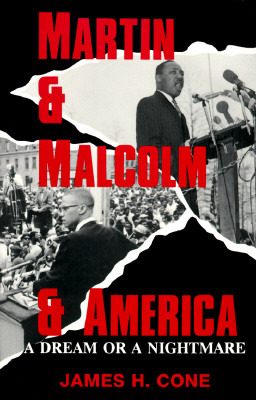
Martin and Malcolm and America: A Dream or a Nightmare? by James H Cone
This would have been a fantastic read during the Civil Rights era segment of history class.  This book explores the different techniques and philosophies of these two iconic leaders and how they were moving toward accord in how to go about achieving equality; MLK’s non-voilence meets Malcolm’s radicalism.


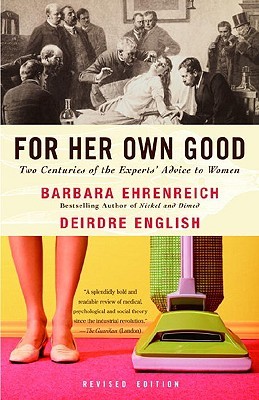
For Her Own Good: Two Centuries of the Experts’ Advice to Women by Barbara Ehrenreich and Deirdre English
My budding feminist tendencies in high school would have been all over this historical exploration of how women have been told by men throughout history how to care for themselves, their bodies, and their mental health- with highly questionable (often harmful) results.


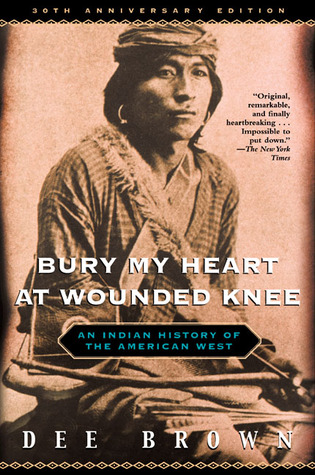
Bury My Heart at Wounded Knee: An Indian History of the American West by Dee Brown
This heartbreaking account of how the First Nations were systematically condensed and obliterated is certainly not the flattering, adventurous summary of Manifest Destiny found in my textbooks.


For English Class:

Things That Make Us (Sic)  The Society for the Promotion of Good Grammar Takes on Madison Avenue, Hollywood, the White House, and the World by Martha Brockenbrough

A read for English class and all those frustrating classmates who didn’t appreciate the fine art & skill of correct grammar (and how ridiculous they might look without it).


Man Without a Country by Kurt Vonnegut
Known for his dramatic, satirical, insightful fiction, Vonnegut is equally gifted in the world of non-fiction.  Vonnegut muses on growing up, war, the state of our country, and literature.  I would have liked a segment in English class on the art of writing non-fiction and the skill required in reflecting upon one’s life.


For Intro to Psych:
Violence: Reflections on a National Epidemic by James Gilligan
How do some people become murderers? What drives people to violence? A maximum security psychiatrist explores these questions.


Freakonomics by Steven D Levitt and Stephen J Dubner
Insights into the strange connections between everything.  


Undercover Journalism:
Black Like Me by John Howard Griffin
A white man endeavors to experience life as a black man in the 1950s Deep South and discovers the privileges he never realized he enjoyed.

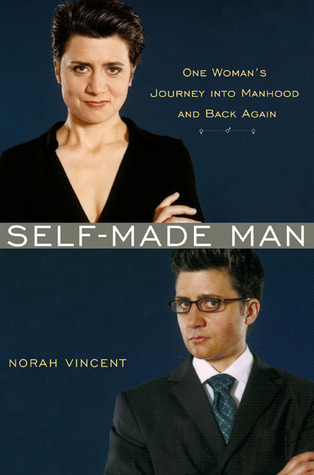
Self Made Man: One Woman’s Journey Into Manhood and Back Again by Norah Vincent
A woman spends a year passing as a man: joining clubs, dating, and seeking employment, observing how the world treats her male alter-ego.


Nickel and Dimed: On (Not) Getting By in America by Barbara Ehrenreich

Do you think all you need is hard work to succeed?  Barbara Ehrenreich debunks that myth by  taking minimum-wage jobs all over the United States.  Despite being mentally and physically draining, low-wage (and often low-respect) jobs fail to deliver an income high enough to survive.  


-Kate
Related Posts Plugin for WordPress, Blogger...